Saturday, 30 April 2016

Casa particular - Trinidad, Cuba

A fortnight into our trip on Cuba we arrived at Trinidad.  A city known for its 19th century architecture. We arrived in the dark, but since we were told that every other house in Trinidad was a casa particular (the Cuban version of a B&B)  we weren't too worried about finding a place to sleep.   We arrived after sunset, but luckily the bus station is in the centre of town.
We walked to the first casa and they were fully booked. So was the second. And third. Then we decided to walk to what we guessed was the main street and started ringing the bell with every house that had a sign.  Conveniently in Cuba all registered casas must have a sign. A few didn't even answer the door and the others were full. And it started to rain. Time for a change of plans.
Living room
We walked into a quieter street, looking for casa signs. First one: fully booked again, but could they recommend a place? Not really.... At that point a neighbour passed by, heard our question, and came to our rescue. He rang the bell at a door with a somewhat weathered casa sign, asked the old man that opened if he had room, and he did! We ended up with Miguel: in an amazing house, with a lovely courtyard and that had a very colonial era atmosphere.  Truely a hidden gem. (For more photos)
It turned out that everything during our stay in Cuba (November '15) was overbooked: so may people wanted to visit before the country opened up in 2016.

Breakfast spot
Miguel works as a physician in the mornings, but is a lovely host after that. He speaks both French and English and loves a chat, but doesn't bother you. Each morning a young couple arrives at the casa; she makes breakfasts and does the housekeeping, he takes care of the house, plants and animals; a large portion of the courtyard is dedicated to bird cages.  Imagine having your breakfast in a luscious green courtyard, with the chatter of birds. And those funny curly tailed lizards!

Curly tailed lizards
The house itself: very heigh ceilings, pastel colours, decorative tiles, shady veranda, and the furniture and bathroom came right out of the 1930s! We really enjoyed our relaxing stay

Friday, 19 February 2016

Traditional temple stay - Koya San

Japans Kii peninsula has long been a mystic area, and therefor is littered with sacred sites. Koya San is one of them. This is where the tomb of Kobo Dashi: the founder of the Shingon school of Buddhism, is. Koya San is a mountain, or rather a plateau, where you will find more temples than houses. The place to spend the night here, is of course in one of these temples. So we did.

Cable car up the mountain 

We took a train from Osaka to the base of the mountain. Once there,  a steep ride with the cable car brings you to the top.  We took bus for the final leg to 'our temple': Muryoko-in.  Once registered, we got our slippers, and a monk showed us to our room.
This was a simple Japanese room: separated by paper walls, futons to sleep on, a few cushions to sit on and yukata (casual kimono) to wear.

Our room, with red slippers in the hallway

After our check in we walked a bit through the town, and then back to our room for dinner. This was a traditional Buddhist dinner: vegetarian and without strong smelling ingredients like garlic or onions. With a quiet knock on the door the monk announced his arrival, and then entered the room with neatly stacked tray tables. Like all food in Japan, this was beautifully displayed.  And tasty too!

Dinner is served

After dinner we took a quick dip in the traditional (shared) Ofuro, layed out our futons and were asleep by 10 pm. The next morning our alarm was set to 5 am! 
We had been invited to join the Gotomaki fire ritual, and being in a temple, we really wanted to. With some other guests, we sat in the back row of the ceremonial room.  The ceremony took about 80 minutes and we both were really glad we were there.  What was it like?

The room was very dimly lit, and one monk was continuously chanting. The other monks joined him intermittently. A fire burned, being fed by one of the younger monks. The whole esoteric atmosphere kind of drew us in. At the end we were invited to participate by adding to the fire and joining the final chant. We didn't take photos but just enjoyed it.

Koya San street view

During our visit a Swiss monk lived in the temple, and he invited us for a little chat afterwards. While drinking tea with some sweets he explained the ritual, the different elements of the Shingon Buddhism and temple live in general. This really added that bit extra to our temple stay. And after our chat.... it was time for breakfast, which we had in a communal room with the other guests.

One of our breakfast dishes

Tuesday, 9 February 2016

Impressive Iguazu - Argentina

In October 2012 we went on our first trip to South America, and so far our only one. Though not because it wasn't good... because it was good!
We had decided to fly into Argentina, and out of Chile. After booking our flights we sat down to decide what we wanted to see and do. Most people might plan a trip the other way 'round, but this method works for us!

On our way to the main falls
So what did we want to see? It came down to Buenos Aires (of course!), the area around Salta on the Argentinian side of the Andes, the area around San Pedro de Atacama on the Chilean side of the Andes and of course.....  the Iguazu falls!

Many birds near the falls, like this black vulture
The Iguazu falls are basically a big collection of waterfalls, and it is simply impossible to seen them all at the same time, unless you take a helicopter ride. The sheer size of it was like nothing I could of imagined.

We did spot a monkey!
Most impressive is the moment when you walk onto the viewing platform at the 'Devil's Throat'. Hearing the the roar of water while you are surrounded by the eternal mists is a moment to remember.  But not one that I could photograph. I suggest you use Google for better photos!

This is a tiny butterfly we spotted, but look at that pattern...
We spent a whole day in Iguazu National Park, as we wanted to get most out of our ticket of course! The walkways near the falls are where the most visitors are, and these can get busy at certain times. Though not nearly as busy as I expected them to be. You walk to the falls on walkways, that are either paved or boardwalk.  You get amazing views of the falls from any different angles, and you can see many birds. We saw different vultures and even a toucan!

Wild guinea pigs! I used to have a guinea pig as a pet
But it is possible to do some really nice, pretty secluded walks through the park. And while you seen mostly the omnipresent coatis at the main routes, you can see some pretty nice animal life if you wander a bit. One of the walks we did was from one entrance to the Devil's Throat. You can take a little train as transport, but walking is nice too!

And to give an impression of the Devil's Throat, this is a short video.

Saturday, 12 December 2015

Cuban colours

I just returned from Cuba: a nation in transition. I'll leave my deeper thoughts for a next post, but right now I just want to share a few photos that are in my mind typical for Cuba.  The colours of her streets.

Typical art deco building in Havana's Vedado

In Havana you can easily distinguish in which area you are, by looking in at the buildings.  Vedado was built in the first halve of the 20th century: Think roaring twenties, art deco in pastel.

Wandering in the streets of Havana Vieja

Havana Vieja is, at the name says, the old part of the city. Though nowadays you can argue about the 'old':  This area is tourist town, and heavily renovated. But very respectfully renovated I must add.

Walking in Trinidad

Trinidad was built during the sugar boom in the 19th century. Colonial style buildings, super high ceilings, wrought iron lattices, and cobbled streets.

Camaguey

Camagüey is one of the very few cities in Cuba that isn't built in a grid like street pattern. Because it was raided several times by pirates it was actually designed as a maze.


Camaguey


Friday, 2 October 2015

Timetravel

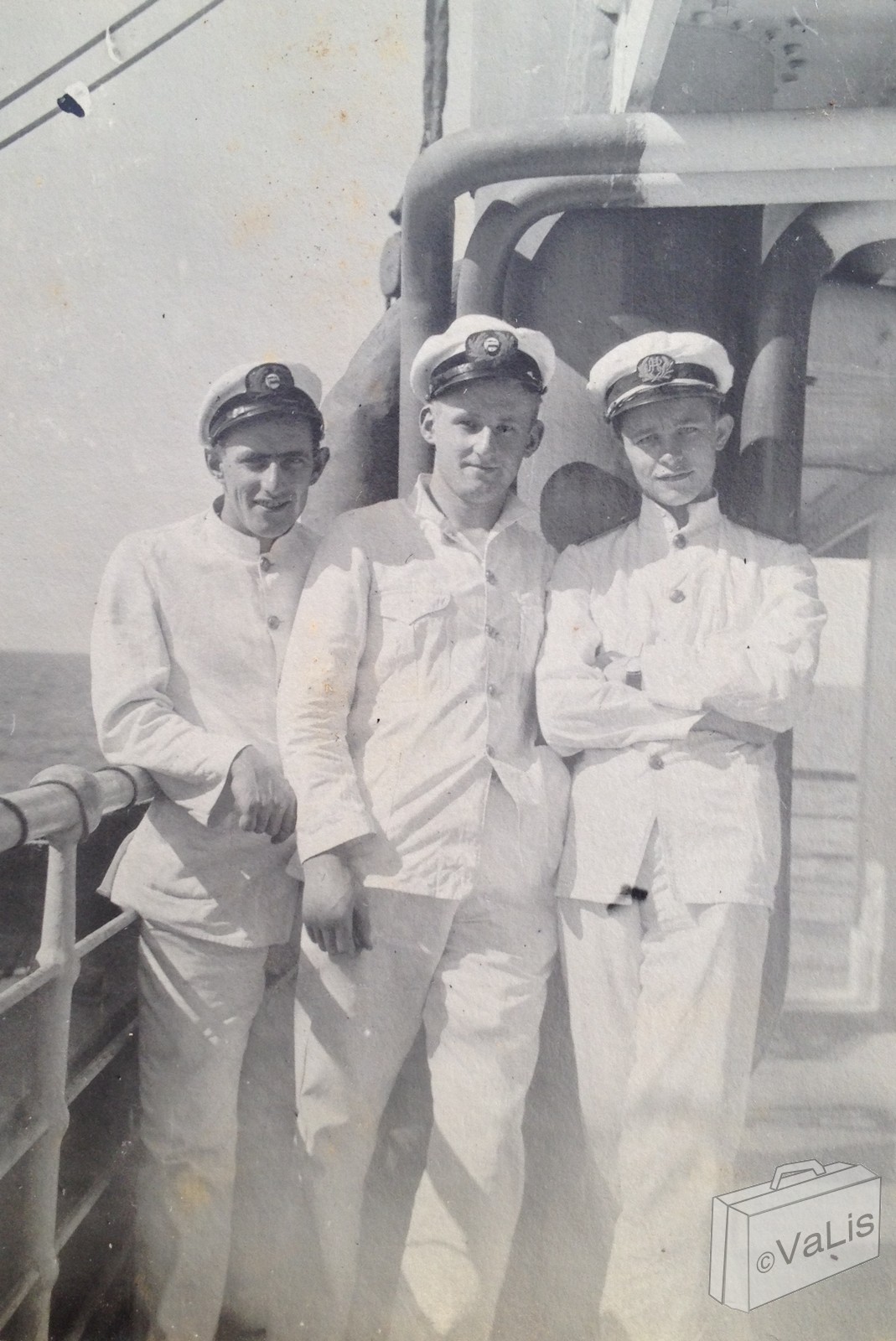
This is a bit of a different post than the usual, but for me a very special one! I have always known that my grandfather had sailed the world when he was younger. On of the reasons I know is that I was always in awe when he told little snippets about that time. And I simply could not believe the places he had been. Maybe the seed of my wanderlust has been planted by him? Or it could be the genes.

My grandfather is the lovely young sailor on the right

Anyway. A few weeks back I learned from a Facebook post that my grandfather had made some photo albums of  his sailing period, and that my aunt had those!  She was kind enough to let me borrow them, and I spent my afternoon looking through them. Really amazing. All he countries he has been to: Mexico, Cuba, India, China, Japan and the Philippines to name a few.


Shanghai. If you look closely you recognize the clocktower in the middel of both photos

Now... my grandfather was born in 1903, and he travelled in the 1920s and 1930s. A truely exiting time. In his albums are progress pictures of the Sidney Harbour bridge and of the Bund in Shanghai without skyscrapers.
But the photos of his life on board are fascinating as well. The interiors of some of the boats!

Both my grandfather and I started travelling outside Europe in our early twenties, but that is an eighty years time difference. I am just humbled and exited at the same time to see how many places we have both visited, but almost a century apart. I keep looking at his photos and than at mine. Finding the differences and similarities.


Nagasaki. Suwa shrine entrance

I loved seeing his photos from Japan: This was the country he talked about most with me, and I am sure my fascination for Japan came from those chats. I visited  Japan last year, and it turns out we have both visited quite a few the same places.  And then I saw the photo from Nagasaki, and it suddenly hit me: he visited before the A-bomb.

As it happens his only photo from Nagasaki was from the only shrine that has not be damaged during the war.

Sunday, 30 August 2015

Midnight sun - Pyhä, Lapland

When I go away in the summer, somehow it usually is outside of Europe and for a longer period. This July I happened to end up in Northern Finland for a week.


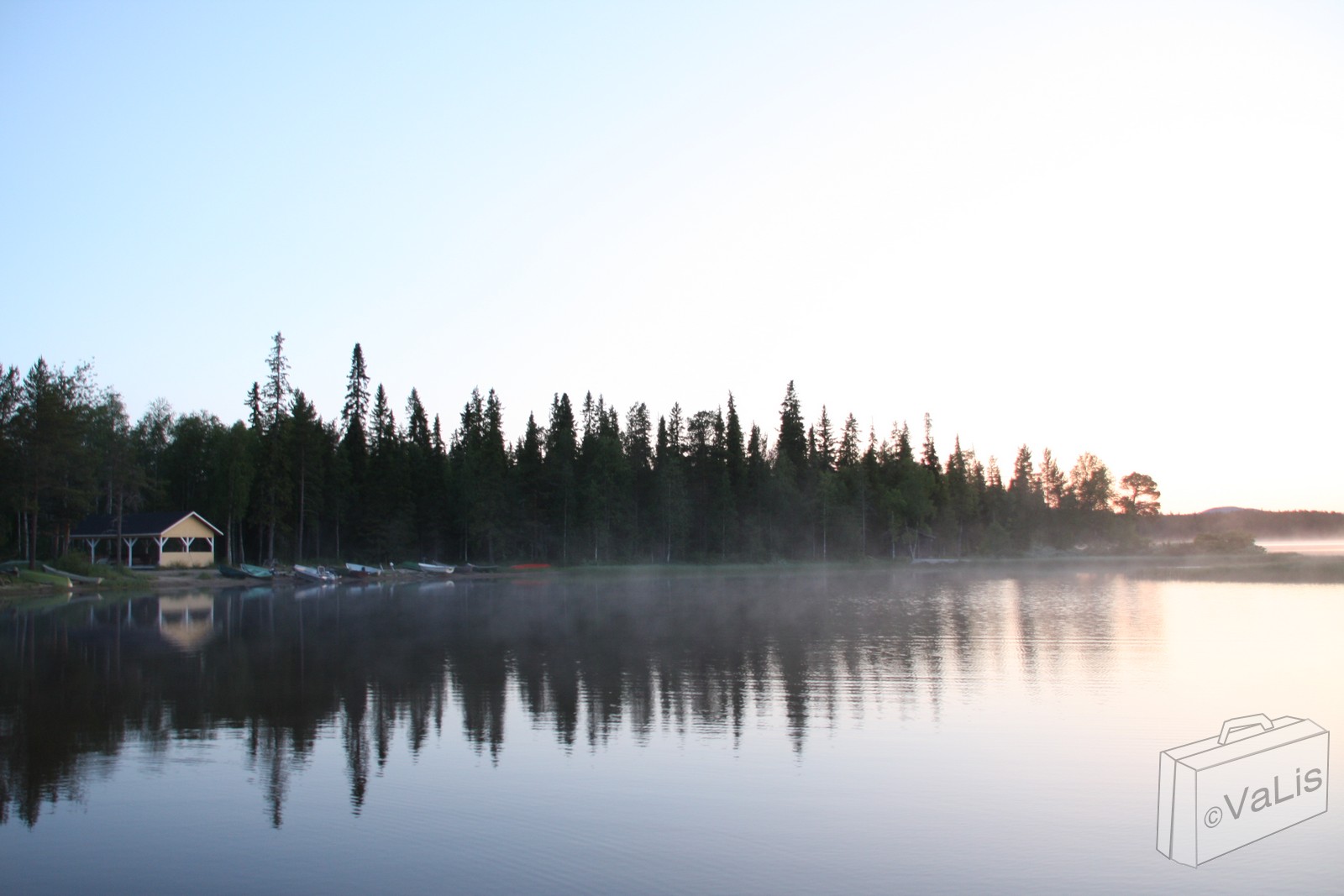
We stayed next to Pyhä Luosto national park, about 100 km north of the Arctic circle. Now, of course above the arctic circle, you have the 24 hour winter nights, but also the 24 hour summer sun! When I was there, it was one of the last weeks that the midnight sun was visible. For me, living much further south, this was an impressive phenomenon.


On one of my nights here, I decided to take a walk around the park. I was so happy I did.
I spend a few hours enjoying the twilight at 2 am at the lake. It was cold, it was quiet, and magic. I watched the mist appear over the lake. The lake itself at moments seemed frozen in time, not a ripple in it.


It's impossible to capture the magic of those hours in words, or in photos. Here is my best attempt, but go out there and make your own memory.

Monday, 27 July 2015

What to do in Helsingfors - Helsinki

We went to Helsinki in juli 2015. Helsinki was not on our 'places-we-must-visit-list', but we had a few stopovers there on our way to and from Asia, and we decided it was about time we got of that airport. And we are happy we did.  The weather forecast was not very good (mostly rain), but turned out pretty well. Since we went in the summer, the days are very long. The sun did set, but was down only for a few hours. So what did we do while we were there?

Helsinki harbour

We visited most of the places that are in the guidebooks and a few places that I read about on different blogs.  Our first evening we walked to the Sibelius monument, the Temppeliaukion kirkko (Rock church, that was closed unfortunately) and after that went into town for a burger and a beer. Then we watched the sun set over Lapinlahti from the Hietaniemen cemetary.
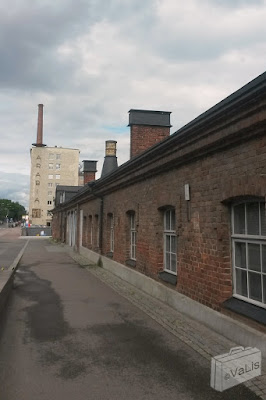
The old Arabia factory

We spent the most of our Friday in town, walking down the Pohjoisesplanadi and the Eteläesplanadi, admiring the gorgeous Jugenstill buildings and the cool stuff in the design shops. I just love Finnish design, so one of the places I wanted to visit was the old Arabia factory. The whole area is now turned into a housing area and really lovely. The factory itself was a tad dissapointing, though I did get my hands on a collectors item from the Iitttala outlet.

Back in town we visited the improptu photo exhibition on the top floor of the Akateeminen Kirjakauppa (Academic bookshop) and of course regularly stopped for coffee with cakes. The Finns do love their cakes.

View from the ferry

There are several markethalls (Kauppahalli) in Helsinki. A nice, albeit touristy one, is near the main harbour: the Vanha Kaupahalli (Old Markethall). Another one is the Hakaniemi Kaupahalli that has the Sunday flea market. Unfortunately the rain was pouring down on Sunday, so we skipped that one. Other places we visited were the Lutheran cathedral and the Russian orthodox cathedral.
Great contrast between the two.

Glooming skies over the Lutheran cathedral

On Saterday it was just lovely weather and we decided to visit one of the islands, and went to Suomenlinna, the old fortress island.  We took a public ferry, and during the boat ride we had a nice view over the Helsinki waterfront.  Suomenlinna consists of five interconnected islands. One has a village on it, and another one still houses the Finnish Naval Academy.  The church dome actually doubles as a light house. I had never seen that before.
The seaside islands are mostly natural, with of course the occasional canon and seawall. It was a lovely day out.
 

Travel tips:

  • Buy a public transport pass for several days. Buying a pass for a few days is cheaper than buying single day passes, and it's just relaxing to hop on and off the trams.
  • We bought a 4-day pass for 2 zones, since this was the same pice as a 4-day pass for 1 zone and 2 separate airport tickets.
  • If you want to visit the Araba factory: take tram 6 or 8 to the second to last stop.
  • You can use your day pass for the ferry to Suomenlinna.
  • When visiting Suomenlinna: use sunscreen!